Search Results for Google Search

Thursday, May 28, 2009

Illuminati

Sejarah

Illuminati adalah sebuah persaudaraan kuno yang pernah ada dan diyakini masih tetap ada sampai sekarang walaupun tidak ada bukti - bukti nyata keberadaan persaudaraan ini sampai saat ini. Illuminati berarti Pencerahan Baru. Para penganut Illuminati disebut Illuminatus yang berarti Yang Tercerahkan. Illuminati sebelumnya bernama Perfectibilists didirikan oleh Adam Weishaupt (1748-1811) seorang keturunan Yahudi yang lahir dan besar di Ingolstadt, memiliki latar belakang pendidikan sebagai seorang Jesuit yang lalu menjadi seorang pendeta Katolik dan selanjutnya mengorganisasi House of Rothschild. Pada perkembangan selanjutnya, ia beserta organisasi yang dipimpinnya memiliki pandangan-pandangan yang menyimpang (bid'ah) dari ajaran resmi gereja Katolik, sehingga ia diekskomunikasi (dilarang mengajarkan pahamnya) oleh gereja dan dikeluarkan dari kelompok gereja kristiani. Illuminatus adalah orang - orang yang mencari jawaban apa yang disebut agama sebagai misteri Tuhan. Menurut mereka dengan ilmu pengetahuan tidak ada lagi misteri Tuhan, semua ada jawabannya.

Dalam novel "Angels and Demon" karya Dan Brown; Salah seorang Illuminatus yang terkenal adalah Galilei Galileo seorang ahli antropologi yang terpaksa harus dihukum rumah seumur hidup oleh gereja akibat membuat pernyataan bahwa pusat alam semesta yang bukan bumi adalah matahari. Pernyataan tersebut dianggap menyinggung gereja karena secara tidak langsung menyatakan bahwa Tuhan dengan sengaja menempatkan pusat kehidupan di planet lain. Sejak saat itu illuminatus diburu oleh para kaum gereja. Mereka diburu dan diberi stamp salib didada mereka baru kemudian dibunuh. Illuminati kemudian bergerak dari bawah tanah sebagai sebuah kelompok rahasia yang paling dicari oleh gereja. Para illuminatus yang melarikan diri kemudian bertemu dengan kelompok rahasia lainnya yaitu kelompok ahli batu yang bernama Freemasonry atau lebih sering disebut sebagai kelompok Mason.

Perkembangan Illuminati

Sejak bergabung dengan kelompok Freemasonry, illuminati menjadi semakin kuat karena dibantu oleh jaringan kelompok Freemasonry yang sepertinya tidak menyadari telah dijadikan alat transportasi aman oleh illuminati. Illuminati terus diburu oleh gereja. Mereka dicap sebagai penganut paham Luciferian Conspiracy, dikarenakan mereka, sama seperti halnya Freemasonry, memiliki ritual pemujaan kepada "Sang Arsitek Agung" / "The Great Architect", yang dilambangkan oleh mereka berupa "The Wholeseeing-Eye" / "Mata tuhan" (diambil dari legenda mesir); yang merupakan simbol dari Lucifer (sebutan setan dalam tradisi kristiani).

Sejak 1782 gerakan Illuminati menyebar dari Denmark sampai ke Portugal, bahkan lebih jauh lagi. Orang-orang Inggris yang terilluminasi bergabung dengan orang-orang Amerika membangun Loji Columbia di kota New York pada tahun yang sama. Seorang bangsawan muda Rusia, Alexander Radischev, bergabung di Leipzieg, dan menyebarkan doktrinnya ke kampung halamannya di St. Petersburg. Di Lisabon seorang penyair bernama Claudio Manuel da Costa menjadi anggota, dan ketika hijrah ke Brazil ia mendirikan sebuah cabang dengan dibantu dua orang dokter dari Ouro Preto, Domingos Vidal Barbarosa dan Jose Alvares Maciel. Pada tahun 1788 trio ini melancarkan pemberontakan Illuminati yang pertama, Inconfidencia Mineira, tetapi pemberontakan itu ditumpas ketika baru saja berputik oleh raja muda Marquis de Barbacena. Hingga saat ini, mereka berjuang secara diam-diam melawan dan berusaha meruntuhkan gereja katolik roma, yang dianggap melambangkan kekuasaan dari Yesus Kristus, musuh Lucifer.

Source (English) : http://en.wikipedia.org/wiki/Illuminati

Sumber (Indonesian) : http://id.wikipedia.org/wiki/Illuminati

Sunday, March 29, 2009

Mt Cook village residents are stumped but not spooked by recent supernatural experiences in the national park's oldest mountain hut.

Mountain guides, visitor centre employees, a helicopter pilot and a cafe manager have all reported paranormal experiences in and around the old hut high up on the Hooker Glacier.

The Hooker hut was built nearly 100 years ago, is a three-hour walk from the visitor centre and sits about 1100 metres above Mt Cook village.

Department of Conservation (DOC) mountain guide Jane Morris and visitor centre assistant Monica Yeoman experienced the surreal when they spent the night of their lives in the hut last Friday.

Ms Morris said she understands their account of paranormal activity could be cause for ridicule.

However, she believes there has been a lack of investigation into the countless reports of spooky happenings in the hut.

Both of them explained the spooky happenings in and around the hut and the lack of investigation surrounding events.

The pair left the village after work and arrived at the hut around dusk on March 20. It wasn't until they had finished dinner and hopped into their sleeping bags that things started to rattle in the night.

(Read More)

Sunday, March 15, 2009

Female 'Vampire' Unearthed in Venice


March 14, 2009 -- An archaeological dig near Venice has unearthed the 16th-century remains of a woman with a brick stuck between her jaws -- evidence, experts say, that she was believed to be a vampire.

The unusual burial is thought to be the result of an ancient vampire-slaying ritual. It suggests the legend of the mythical bloodsucking creatures was tied to medieval ignorance of how diseases spread and what happens to bodies after death, experts said.

The well-preserved skeleton was found in 2006 on the Lazzaretto Nuovo island, north of the lagoon city, amid other corpses buried in a mass grave during an epidemic of plague that hit Venice in 1576.

"Vampires don't exist, but studies show people at the time believed they did," said Matteo Borrini, a forensic archaeologist and anthropologist at Florence University who studied the case over the last two years. "For the first time we have found evidence of an exorcism against a vampire."

(Read More)

Wednesday, March 11, 2009

The lost world beneath the Antarctic ice

British scientists are about to mount one of the boldest-ever missions, to search for life forms that have survived for possibly millions of years in a frozen "lost world" beneath an ancient ice sheet.

This week, a team of Antarctic scientists has been given the go-ahead to drill through a two-mile-thick sheet of ice that has sealed a sub-glacial lake from the rest of the biosphere for at least as long as Homo sapiens has walked the Earth.

They hope to find species that have survived below the ice sheet since it formed between 400,000 and two million years ago. Finding life in such an extreme environment would be one of the most important discoveries of the century, raising the prospect of searching for extra-terrestrial life on Europa, a moon of Jupiter where life is thought to exist beneath a frozen ocean. The scientists plan to use sophisticated ice-drilling technology developed in the UK to penetrate the ice cap and enter the liquid-water world of Lake Ellsworth in West Antarctica, one of about 150 sub-glacial lakes scientists have recently mapped with ice-penetrating radar.

Read more : http://www.independent.co.uk/news/science/the-lost-world-beneath-the-antarctic-ice-1639247.html

Nasa launches search for second Earth

The launch of the Kepler spacecraft from Cape Canaveral in Florida today marks the beginning of the most ambitious hunt for planets like ours in distant solar systems.

The Kepler telescope will spend three-and-a-half years staring deep into a starry region of the Milky Way, in the direction of the constellations Cygnus and Lyra, in the hope of spotting Earth-sized planets as they pass in front of their stars.

Every half hour, Kepler will record the brightness of 100,000 stars using a 95 megapixel camera built by the British firm e2v. The camera is so sensitive, it could spot the imperceptible dimming of a car headlight as a fly wanders across it.

The mission will focus its attention on planets in the "Goldilocks region" of space, where conditions are just right for liquid water to exist. Some of these worlds could potentially be home to life as we know it.

By the end of the mission, we may have a clearer idea of our place in the universe, and whether warm, wet rocks like Earth are the exception rather than the rule.

source : http://www.guardian.co.uk/science/blog/2009/mar/07/kepler-probe-habitable-planets-extraterrestrial-life

Tuesday, March 3, 2009

The Pyramids of Giza vs the Mars craters of Tharsis

The following similarities between layout of the Pyramids of Giza
and craters of Tharsis on Mars are most likely a coincidence...

HST photo of Mars showing Olympus and 3 craters of Tharsis area.

Above: surface of Mars map showing Olympus and Tharsis (left).
Below: close-up of the Olympus and Tharsis area.

Superimposed satellite image of the pyramids and NASA photo of Tharsis on Mars.


source : http://www.world-mysteries.com/giza_vs_tharsis_mars.htm

Monday, March 2, 2009

Secrets of Brain

1. Your brain loves color. Use colored pens – good quality, not gel pens – or use colored paper. Color helps memory.

2. Your brain can effectively focus and concentrate for up to 25 minutes (adults). Take a 10-minute break after every 20-30 minutes of studying. Go do some chores: rake the lawn, iron a shirt, vacuum. Come back after 10 minutes and do another focused, intense session.

3. Your brain needs to be rested to learn fast and remember best. If you are tired take a 20-minute nap first otherwise you are wasting your study time.

4. Your brain is like a motor: it needs fuel. You wouldn’t put dirty fuel in your Lamborghini (if you had one) or you wouldn’t put low quality fuel in a rocket, would you? Well, your brain is a much more valuable, intricate machine than either of those so feed it properly. Junk food and imitation food and all the chemicals and preservatives weaken both your body and your mind. In fact, a recent study in England showed that your IQ is affected by your diet.

5. Your brain is like a sea of an electro-chemical activity. And both electricity and chemicals flow better in water. If you are dehydrated you just don’t focus as well. Drink enough water (colored liquids – pop, juice, coffee, etc. – are not the same). Often times headaches are connected to dehydration, too.

6. Your brain loves questions. When you come up with questions in class or when reading a book, your brain automatically searches for answers, making the learning faster. A good question has more than one answer.

7. Your brain and body have their own rhythm cycles: there are times during the day when you are more alert than others. You will save time learning if you study during your peak periods. If you have a part-time job that happens during your peak period you may wan to reconsider if it is wise to be giving your employer your best learning time.

8. Your brain and body communicate constantly. If your body is slouched down, the message the brain gets is that “this is not important” and so it doesn’t pay as close attention. In any learning situation, sit up and lean forward to help keep your mind alert. Buy a good quality, adjustable office chair.

9. Your brain is affected by smells. Use aromatherapy to keep your brain alert. Peppermint, lemon and cinnamon are good ones to experiment with.

10. Your brain needs oxygen. Get out there and exercise.

11. Your brain needs space. Be sure that you are not trying to study in a small cramped area.

12. Your brain needs your space to be organized. One recent study showed that kids who grow up in tidy, organized homes do better academically. Why? Because by being trained to organize the outside environment, the brain learns to organize the internal knowledge…which makes recall faster. Buy a 4-drawer legal-sized filing cabinet.

13. Your brain cells in the hippocampus, a part of the brain that deals with putting information from short-term to long-term memory, are destroyed by cortisol, which is created when you are stressed. So, yes, stress affects memory. How do you get rid of cortisol? Exercise.

14. Your brain doesn’t know what you can’t do until you tell it.
What are you telling it? Listen to your self-talk. Stop the negativity. Replace it with more positive, encouraging talk.

15. Your brain is like a muscle: it can be trained and strengthened, at any age. No excuses. Stop being a mental couch potato. Professional athletes practice every day; you can practice homework everyday. If “you don’t have any”, make some up for yourself. Read ahead, review…do SOMETHING.

16. Your brain needs repetition. It is better to do short frequent reviews than one long review because what counts is how many times your brain sees something, not how long is sees it in one sitting.

17. Your brain can understand faster than you can read. Use a pencil or finger to “lead” your eyes. By doing so you help your eyes move more quickly.

18. Your brain needs movement, especially if you are mostly a kinesthetic (body movement) learner instead of a visual or auditory learner. You might find your productivity go up if you have a standing desk. Buy one or make one by raising your desk/table on blocks. This allows you to move more easily and stay more alert.

19. Your brain seeks patterns and connections. When you are learning something, ask yourself, “What does this remind me of?” This will also help your memory because it connects the new knowledge to something you already know.

20. Your brain loves fun. We learn in direct proportion to how much fun we are having. Learning is life. Live it up!

source : http://www.world-mysteries.com/

A Link between Egypt and Americas?

According to the official view there was no contact between the Old World and the New World before Columbus. Yet numerous similarities have been found that suggest a link between Egypt and the Americas:
  • Both have huge pyramids, aligned to the cardinal points

  • Both have structures built with megalithic stones and extremely fine joints

  • Both exhibit intriguing bumps on many unfinished stone blocks (Picture 1)

  • Both employed a unique style of construction using "L" shaped corners

  • Both use the same style of metal clamps to hold the huge stones in place

  • Both used the process of mummification to preserve and honor their dead

These compelling similarities suggest that both ancient cultures were influenced by a sophisticated common source.

source : http://www.world-mysteries.com

Wednesday, February 25, 2009

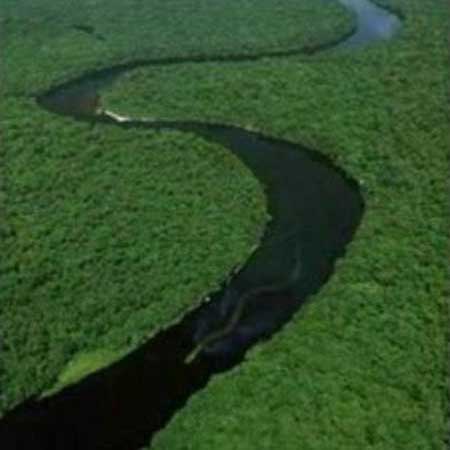
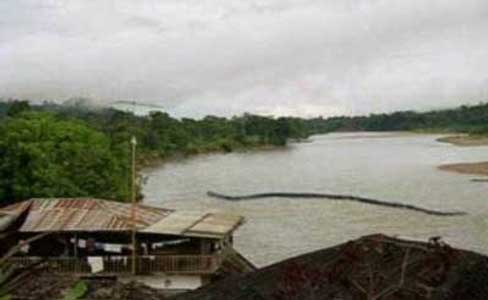
Two Pictures Show the 100-Foot 'Borneo Monster'

Two photographs have been recently released from unknown sources in Borneo, depicting the weirdest of occurrences – a 100 foot-long snake-like creature cruising in the waters of the Baleh river. Natives are understandably scared of that, as they believe that the alleged monster is the mythical Nabau creature, a dragon-like serpent that has the ability to change its shape whenever it pleases. Western observers are, however, reluctant to accept the pictures as genuine, saying that there are serious clues in them that give away the fact that they are most likely fake.

Allegedly, one of the photos, taken from a helicopter, is said to be the work of a member of the flood surveillance team. But his or her name has not come out, and the date on which the image was taken also remains a secret. This further helps to amplify critics as to the accuracy of these snapshots. Another reproach is that there only appear to be two photographs of the beast, even though those in the helicopter could have taken numerous ones from the safety of the air.

In the first picture, the alleged animal is seen swimming idly in the middle of the river, but its position is just perfect for the photo. Plus, it should, according to estimates, be 100 foot (33 meter)-long, but the relative size of the trees near it seems to contradict that. You can form an opinion for yourself while looking at the image and searching for discrepancies between how water is displaced by the monster, as well as its relative size.

In the second picture, it clearly appears in all its splendor, photographed from the side. Again, notice the fact that the ratio between its size and that of the trees seems to change drastically between the two snapshots. In the first one, it looked like it was thicker than a few trees bound together. In the second, it only appears to be an over-sized snake. Also, its length seems to be smaller. Again, its position is just wonderful for the shot, which allegedly has been taken in a “remote” village.

No one can dispute the fact that the locals really buy into this story. But scientists have a tougher time in doing so, as they always require a little something called proof. And the question arises “Why are there only two pictures of the creature, when most certainly those wielding the cameras would have been most excited to capture even more?” Allegedly, one of the photos, taken from a helicopter, is said to be the work of a member of the flood surveillance team. But his or her name has not come out, and the date on which the image was taken also remains a secret. This further helps to amplify critics as to the accuracy of these snapshots. Another reproach is that there only appear to be two photographs of the beast, even though those in the helicopter could have taken numerous ones from the safety of the air.

Source : http://news.softpedia.com/news/Two-Pictures-Show-the-100-Foot-039-Borneo-Monster-039-104996.shtml

10 False Alarms for Alien Life

by Dave Mosher and Irene Klotz

Humans are a persistent bunch when it comes to seeking out alien life.

We've poked under the rocks of distant planets and kept radio telescopes tuned in for "the" signal. So far, however, our efforts have left us empty-handed.

But that's not to say we haven't come close to confirming extraterrestrial existence -- sort of. As the science matures, the evidence seems to become tougher to dismiss.

From the outlandish cities on the moon to mysterious Martian methane plumes, here we cover the top 10 false alarms in the quest for life off Earth.

10. Carnivals on Venus

Armed with the best telescopes of their time, 18th- and 19th-century astronomers began to study Venus obsessively. From their view, the cloud-covered planet looked as if it were covered in mountains and thick jungle, among other fanciful conclusions.

To explain strange bright spots on the dark limb of the planet (caused by the clouds refracting sunlight) German astronomer Franz von Paula Gruithuisen made an interesting conclusion: Venus had inhabitants who "organize festivals and general illuminations" during religious celebrations or changes in government.

Some ridiculed him, but other serious astronomers bought the claims up through the early 1900s.

9. City on the Moon

Gruithuisen didn't stop with contemplating the existence of his extravagant Venetians.

Following in the footsteps of fellow astronomer Johann Schröter, Gruithuisen aimed his telescope at the moon and saw a city built by a civilization of "Lunarians" in 1822. What are in fact craters and natural ridges appeared to be buildings connected by streets leading to a star-shaped temple.

Satirizing such claims, New York Sun writer Richard Locke created the Great Moon Hoax of 1835. Locke tantalized a gullible public with a six-part series falsely quoting astronomer John Herschel about the existence of unicorned goats, rolling amphibious balls, and winged humanoid bats.

8. Canals on Mars


After being duped into believing strange creatures lived on the moon, 19th-century astronomers sought signs of life elsewhere in the solar system.

Astronomer Giovanni Schiaparelli might have drawn up the most detailed yet maps of Mars in 1877 -- used even to select Viking spacecraft landing sites -- but Hubble's best images of the Red Planet leave one to wonder what he actually saw. His most famous contribution was noting a series of "canali," or canals, across Mars.

Talk about the power of suggestion. Bostonian astronomer Percival Lowell ran with Schiaparelli's canali, suggesting that they were "the work of some sort of intelligent beings." To his death Lowell believed in a planet-wide system of irrigation canals, but modern astronomy has since soundly debunked them.

7. The Face on Mars


When NASA's Viking 1 orbiter photographed the Cydonia Mensae region of Mars -- where the Viking 2 orbiter was to touch down -- the world went crazy in July 1976.

In a press release, NASA's Jet Propulsion Laboratory described the famed Face on Mars as an illusion of shadows. Nonetheless, a pareidoliac public was convinced it was the work of an intelligent civilization.

Nearly 25 years later, new images came back from the Mars Global Surveyor showing the face was, without a doubt, just a butte or mesa. With people still unconvinced, however, NASA also released 3-D reconstructions of the feature to firmly quash the claims.

6. Martian Caves


The exterior of Mars is a dry, bone-chilling and altogether unwelcoming place to be. But could life teem in a place shielded from such conditions?

In 2007, scientists announced the discovery of seven holes the size of football fields dubbed the "seven sisters": Annie, Abbey, Chloe, Dena, Nikki, Jeanne and Wendy. The shadowed "cave skylights" are warmer than the surface above, possibly giving life shelter from a harsh Martian landscape.

Until a spacecraft -- or human explorers -- can climb into the mysterious holes to explore for life there, we'll never be certain.

5. Roswell UFOs?


Why bother looking for extraterrestrial life? All you have to do is look up in the sky.

Or better yet, get access to the secret government site in Roswell, N.M., where the remains of an alien spacecraft -- and possibly its occupants -- have been sealed away.

So says Apollo astronaut Edgar Mitchell, who is not alone in his theory that Earth is a popular stopping point for visitors from beyond.

4. Europa's Oceans

Beneath the frozen face of Europa, one of the many moons of Jupiter, lies a liquid ocean warmed by the not-so-gentle gravitational tugs from sibling satellites.

On Earth, water and life seem to be an inseparable pair. While scientists have no reason to think the same isn't true elsewhere in the universe, the proposal is dead in the water until these distant oceans are sounded.

3. Allan Hills Meteorite


For a while, extraterrestrial life had a name: ALH84001.

This meteorite from Mars, which scientists recovered from Antarctica, showed what were initially believed to be fossilized remains of bacteria.

It turned out to be one false step for life beyond Earth, but one giant leap for revitalizing NASA's long-dormant Mars exploration program.

2. SETI's "Wow!" Signal

Microbial life just doesn't cut it for some scientists; it's news of the intelligent variety they crave, particularly those species sociable enough to give us a cosmic "howdy, partner."

Astronomers involved in the Search for Extraterrestrial Intelligence, nicknamed SETI, have spent more than three decades tirelessly combing radio waves for non-naturally occurring signals.

They may have gotten one once -- a signal so "out-there" that an astronomer simply wrote the word "Wow!" on a computer printout of the blip -- but it vanished from the proverbial radar and has never been heard again.

1. Martian Methane


In January 2009, some media outlets reported that NASA had found signs of life on Mars. Thing is, they hadn't ... not yet, anyway.

The news stories surrounded an embargoed report in Science magazine about the discovery of methane plumes on the Red Planet. The early reports were so outlandish, however, that Science didn't even consider its protective embargo on the report broken.

Still, the sources of the atmospheric gas are an intriguing mystery -- not only because on Earth most methane comes from "biological processes" (i.e. cow farts), but because methane is a rich food stock for microbial populations.

Source : http://dsc.discovery.com/space/top-10/alien-life-evidence/index.html